
A Review of COVID-19 Vaccine Candidates

A Review of Current COVID-19 Vaccine Phase III and Emergency Use Authorization Candidates
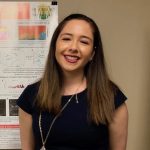
Ashley Atkinson, 3rd year

Abstract

As the pandemic caused by SARS-CoV-2 continues into 2021, it is important to analyze available data for promising vaccine candidates. The purpose of this review is to summarize vaccine types and gather and evaluate public data regarding the safety, efficacy, and immunogenicity of twenty different COVID-19 vaccines in phase III trials as well as those authorized for emergency use.
Continue reading “A Review of COVID-19 Vaccine Candidates”


Structuring Synthetic Communities

Directed Spatial Structure and Patterning in Synthetic Communities

Daniel Ducat, Principal Investigator
Lisa Yun, Ph.D. Candidate
Kimberly Watson, 4th year

Abstract

Microbial communities play a foundational role in system regulation. The spatial structure of these natural communities in the environment is something that cannot be controlled in synthetic cultures yet. In order to achieve this, the adhesin pair of SpyTag and SpyCatcher was used. In Synechococcus elongatus (S. elongatus), SpyTag-FLAG was used for immunofluorescence, confirming the expression, transport, and display of the protein on the outer membrane (OM) via SomA.
Continue reading “Structuring Synthetic Communities”

Transracial Adoptee Psyche and Mental Health

2021 MSUFCU Diversity & Inclusion Award for the Lyman Briggs Research Showcase
Effects of Adoption on the Psyche and Mental Health of Transracial Adoptees
Abi Otwell, 4th year

Abstract

Transracial adoptees form a small minority group that is subject to an intriguing combination of social pressures that creates distinct stressors on mental health. Attempts to navigate two or more cultures when developing their racial/cultural self-identity can cause transracial adoptees to feel isolated from multiple social communities.
Continue reading “Transracial Adoptee Psyche and Mental Health”

Collecting Seed Bacteria Under Stressors

Curating a Collection of Seed Bacteria Community Members Enriched Under Maternal Plant Stress
Joanna Colovas, 3rd year

Abstract

Many plants rely on interactions with microbes to gain essential nutrients for growth and to promote stress tolerance. One way that plants can acquire their microbiota is via vertical transmission from the parent plant via the seed. However, there is currently a knowledge gap regarding the seed microbiome and its consequences for the next generation of plants.
Continue reading “Collecting Seed Bacteria Under Stressors”

A Ray of Hope

A Ray of Hope: investigating the effect of light composition on shelter cat welfare
Kathryn Hurt, 3rd year

Abstract

Cats that are adopted quickly tend to cope well in the shelter environment, showing affiliative, engaging behaviors at the front of the kennel toward potential adopters. Cats that do not cope well may hide in the back of the kennel or if provided, in a hide box, and tend to have longer stays in the shelter.
Continue reading “A Ray of Hope”

Mammalian Magnetoreception Capabilities

Megan Weil headshot Conscientious Mammalian Magnetoreception Capabilities by Means of the Cryptochrome-2 Protein
Megan Weil, 2nd year

Abstract

Changes in Earth’s magnetic field are known to influence the behavior of organisms from all five kingdoms of life. In mice, the cryptochrome-2 repressor is the recognized protein responsible for their magnetoreception capabilities. The extent of the receptor’s influence is unknown, and whether its associated responses are due to subconscious instinct or conscious choice.
Continue reading “Mammalian Magnetoreception Capabilities”