
Computational Experiments Using MS

Computational Experiments to Investigate Biological Questions Using ms
Maria Pacifico, 2nd year

Abstract

Programs have been developed for comparative genomics and the creation of phylogenetic trees using algorithms. Within the program ms (Hudson, 2002), we are studying population genetics and phylogenetics. Ms generates a simple sample model according to the Wright-Fisher neutral model based on chosen parameters.
Continue reading “Computational Experiments Using MS”

Lactation and the Gut Microbiota

2021 MSUFCU Best Biology oral presentation for the Lyman Briggs Research Showcase

Fecal Bacterial Communities Differ by Lactation Status in Post-Partum Women and Their Infants
Eliot Haddad, 3rd year

Abstract:

Breastfeeding has numerous benefits for both the mother and her infant after birth. The gut microbiota, the collection of microorganisms inhabiting the human gastrointestinal tract, has been shown to be modulated in infants by human milk exposure.
Continue reading “Lactation and the Gut Microbiota”

Presence of E.Coli in Differing Water Sources

The Presence of Escherichia Coli in Stagnant vs Flowing Water Sources

Aidan Gard, 2nd year
Nandini Koneru, 2nd year
Vira Mehta, 2nd year
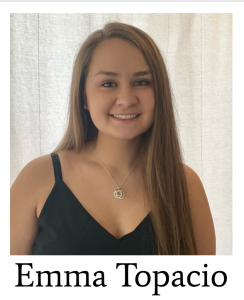
Emma Topacio, 2nd year


Abstract

In this project we set out to investigate the presence of Esceheria Coli in Stagnant versus running water. After noticing how prevalent issues with water quality and safety are across the country and world, obtaining safe drinkable water was an issue we wanted to look into. The ongoing Flint Water Crisis was our prime example in which the citizens’ main source of water was contaminated with lead and deemed unsafe. We used two types of water sources: stagnant water sources and flowing water sources.
Continue reading “Presence of E.Coli in Differing Water Sources”

Antioxidant Content of Grass and Grain

Comparison of Antioxidant Content in Complex Pasture vs. Conventional Feed for Beef Cattle by Time

Esha Garg, 2nd year
Viji Jambunathan, 2nd year
Srikar Kesamneni, 3rd year
Humza Ali, 4th year

Abstract

Grass-finished beef is generally considered healthier than grain finished beef in part because the omega-6/omega-3 ratio is reported to be lower. However, complex pasture mixtures are also purported to contain higher concentrations of plant secondary metabolites; the consumption of which is thought to be important for human health. The objective of this study was to compare the carotenoids and chlorophyll in complex pasture vs conventional feed.
Continue reading “Antioxidant Content of Grass and Grain”

Ventral Pallidum Role in Social Play Behavior

Role of the Ventral Pallidum in the Regulation of Social Play Behavior in Juvenile Rats
Elie Huez, 4th year

Abstract

Social play behavior is a rewarding behavior and displayed by juveniles of many mammalian species. Engagement in social play behavior is important for the development of social competence throughout life. Children diagnosed with neurodevelopmental disorders such as autism spectrum disorder (ASD) show social play deficits, which may contribute to their life-long social deficits.
Continue reading “Ventral Pallidum Role in Social Play Behavior”

COVID-19 Impact on Low-Income Families

The COVID-19 Pandemic Negatively Affected Low-Income Families’ Lives: A Descriptive Study

Nandini Koneru, 2nd Year and Meghana Jalagam, 2nd Year

Abstract

First documented in December 2019, the SARS-CoV-2, also known as COVID-19, has spread across the world rapidly to cause a massive global pandemic. In addition to the health crisis, families are facing challenges to their everyday life, specifically families under the poverty level. However, limited studies were conducted among low-income families with young children; thus, this study aimed to assess the effects of COVID-19 on low-income families’ lives.
Continue reading “COVID-19 Impact on Low-Income Families”

Marijuana, Cigarette Smoking, and Adenomyosis Risk

2021 MSUFCU Runner up Biology oral presentation for the Lyman Briggs Research Showcase
A Novel Case-Control Study on Marijuana and Cigarette Smoking and the Risk of Adenomyosis
Grace Joachim, 4th year

Abstract

The uterine condition adenomyosis can produce substantial symptoms, including painful menses and heavy menstrual bleeding. Although the etiology of adenomyosis remains enigmatic, estrogen plays a central role in disease development. Two common exposures that may alter estrogen concentrations and affect adenomyosis risk are marijuana and cigarette smoking.
Continue reading “Marijuana, Cigarette Smoking, and Adenomyosis Risk”

Bicalutamide as Treatment for Kennedy’s Disease

2021 MSUFCU Grand Prize Award for the Lyman Briggs Research Showcase
FDA Approved Drug Bicalutamide Rescues Male Mice from Kennedy’s Disease
Mackenzie Greene, 3rd year

Abstract

Kennedy’s Disease (KD) is a neurodegenerative disorder caused by a polyglutamine expansion, or CAG repeat, in the Androgen Receptor (AR) gene. This disease affects only males, usually emerges mid-life, and is characterized by marked deficits in muscle strength and coordination. Male mice with the KD allele develop muscle weakness around puberty as testosterone levels surge, suggesting that levels of testosterone may contribute to disease development in mice with mutated AR.
Continue reading “Bicalutamide as Treatment for Kennedy’s Disease”

Vertebrate CtBP C-Terminal Conservation

Structural and Sequence Conservation of the CtBP Corepressor C-Terminal Domain Across Vertebrate Species

Kalynn Bird, 3rd year
Madeline Niblock, 3rd year

Abstract

The C-terminal Binding Protein (CtBP) is a transcriptional corepressor that regulates gene expression and functions as a tumor suppressor. The CtBP catalytic core resembles an NAD(H)-dependent dehydrogenase, and binding to the NAD(H) cofactor enables formation of dimers and tetramers. The less conserved C-terminal domain (CTD) has not been structurally characterized and a functional role remains elusive. Some organisms, like Drosophila, have a single CtBP gene with multiple splice isoforms that encode variant “short” and “long” CTDs. Vertebrates encode two paralogous genes, CtBP1 and CtBP2.
Continue reading “Vertebrate CtBP C-Terminal Conservation”

Oxybenzone and Mammary Gland Development

2021 MSUFCU Honorable Mention Award for the Lyman Briggs Research Showcase
Effects of Oxybenzone on Epithelial Ductal Development in Murine Mammary Glands
Calista Busch, 2nd year

Abstract

Oxybenzone (benzophenone-3; BP-3) is a putative endocrine disrupting chemical, and common ingredient in sunscreens and many personal care products. Endocrine disrupting chemicals can interfere with the normal action of reproductive hormones. BP-3 is found in the urine of as much as 98% of the U.S. population.
Continue reading “Oxybenzone and Mammary Gland Development”