

 |
Ovarian Follicular Structures in Mexican Wolves: Clues to Infertility Heather Sayles, 2nd year |
Abstract
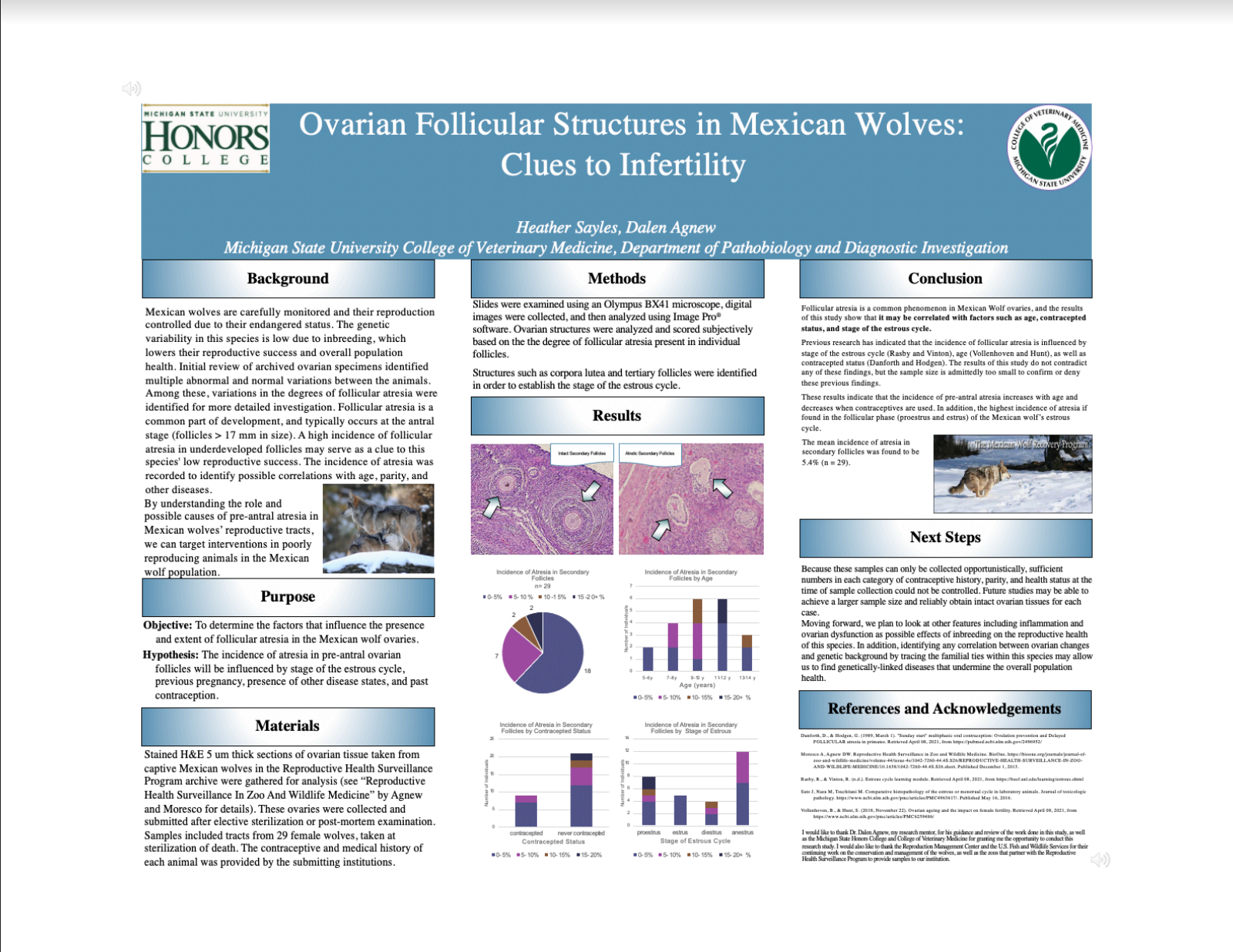
Mexican wolves are carefully monitored and their reproduction controlled because of their endangered status. The genetic variability in this species is low due to inbreeding, which lowers their reproductive success and overall population health. In humans and other species, premature ovarian senescence has been linked to infertility. To better understand the reproductive problems plaguing this species, ovaries are collected from Mexican wolves after death or elective sterilization and evaluated grossly and microscopically in order to identify abnormalities.
37 ovarian cross-sections from 27 females were included in the study. The quantity and quality of follicular structures and corpora lutea were determined, including primordial, primary, secondary, and tertiary follicles, corpora luea, corpora hemorrhagica, corpora albicans, and atretic follicles. To evaluate the density and distribution of follicles, the mean number of all stages of follicles per linear cortical surface area was calculated after observation under a microscope. Evaluation of the follicles was conducted without prior knowledge of the age, previous parity, and other relevant information of the females. Increased prevalence of atresia in primordial and primary follicles might implicate premature ovarian senescence as a factor in the infertility observed in Mexican wolves. With this knowledge, appropriate breeding recommendations and possible therapies may be instituted to improve ovarian function.
Click to open in new tab.