
 |
Effects of modulating muscle contractions on embryo movement in early mouse pregnancy
Madeline Dawson, 3rd-year |
Abstract:
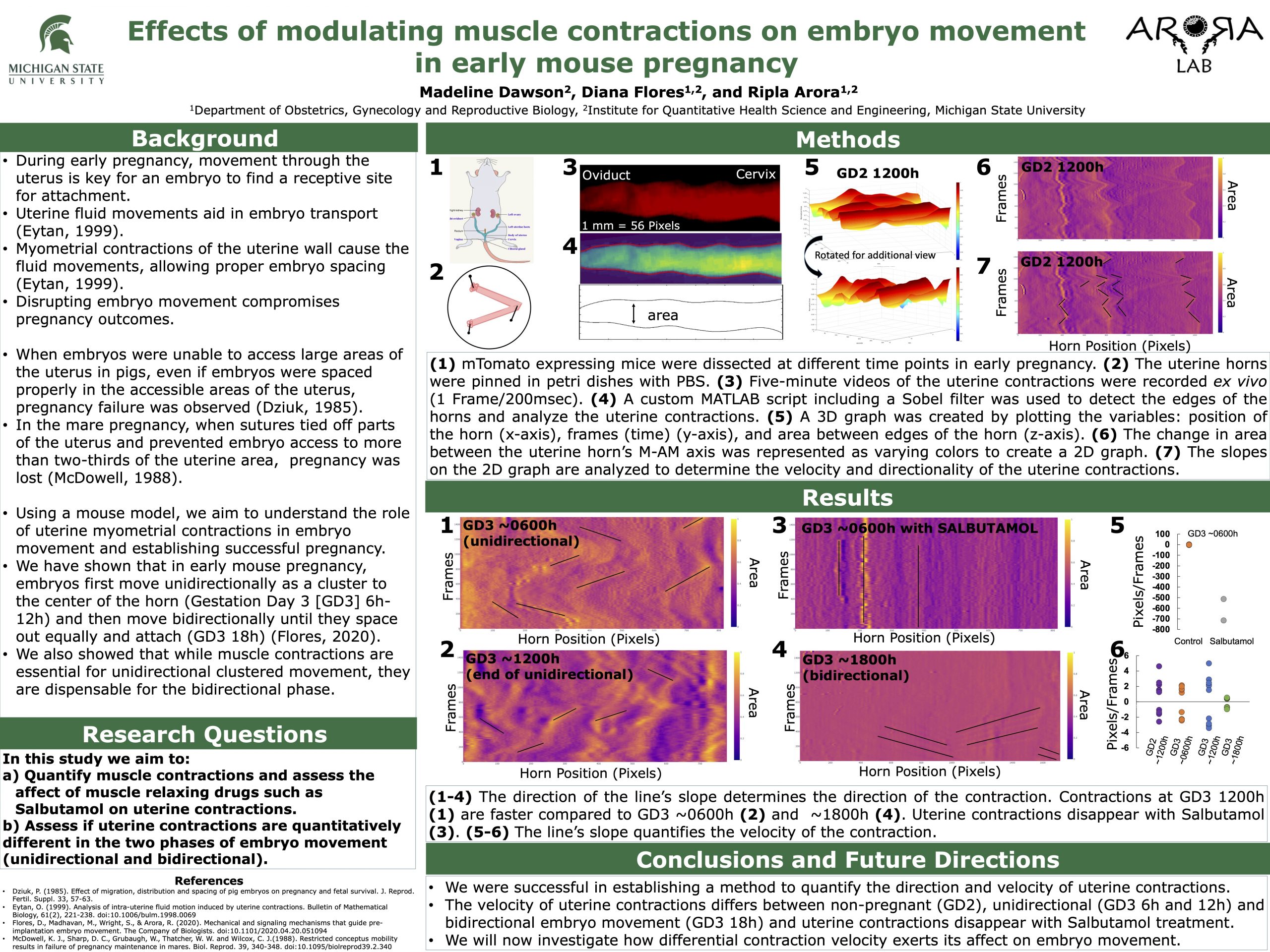
Early-stage mammalian embryos rely on physical and biological interactions with the maternal environment (uterine niche) to arrive at their site of attachment. In the mouse during early pregnancy, embryos first move unidirectionally, as a cluster, away from the oviduct towards the center of the uterine horn. Next, the embryos spread out bidirectionally towards the oviduct and the cervix until they space equally and attach.
We are currently investigating the role of uterine muscle contractions in the movement of embryos by asking: a) do muscle relaxing drugs prevent contractions of the uterus?, b) does modulating the contractions prevent embryo movement? and c) which phase of embryo movement (unidirectional or bidirectional) is affected? To answer the questions, I will be using image analysis techniques to quantify uterine horn contractions. First, we record 2D videos of the muscle and graph the longitudinal movement on the x-axis and transverse movement on the y-axis. Using image analysis, I then determine the lines’ slopes to calculate the intensity and magnitude of the contractions. ″Contraction intensity″ thus quantified, is then compared between a) uterine horns at different times during pregnancy, and b) with and without drug treatment. These quantitative data will allow me to start addressing questions regarding embryo movement and the effect of drugs on this movement. Understanding how muscle relaxation affects pregnancy in the mouse model will inform the potential for these drugs to regulate contractions that lead to spontaneous abortions and miscarriage in pregnant women.