

2021 MSUFCU Honorable Mention Award for the Lyman Briggs Research Showcase
 |
Effects of Oxybenzone on Epithelial Ductal Development in Murine Mammary Glands Calista Busch, 2nd year |
Abstract
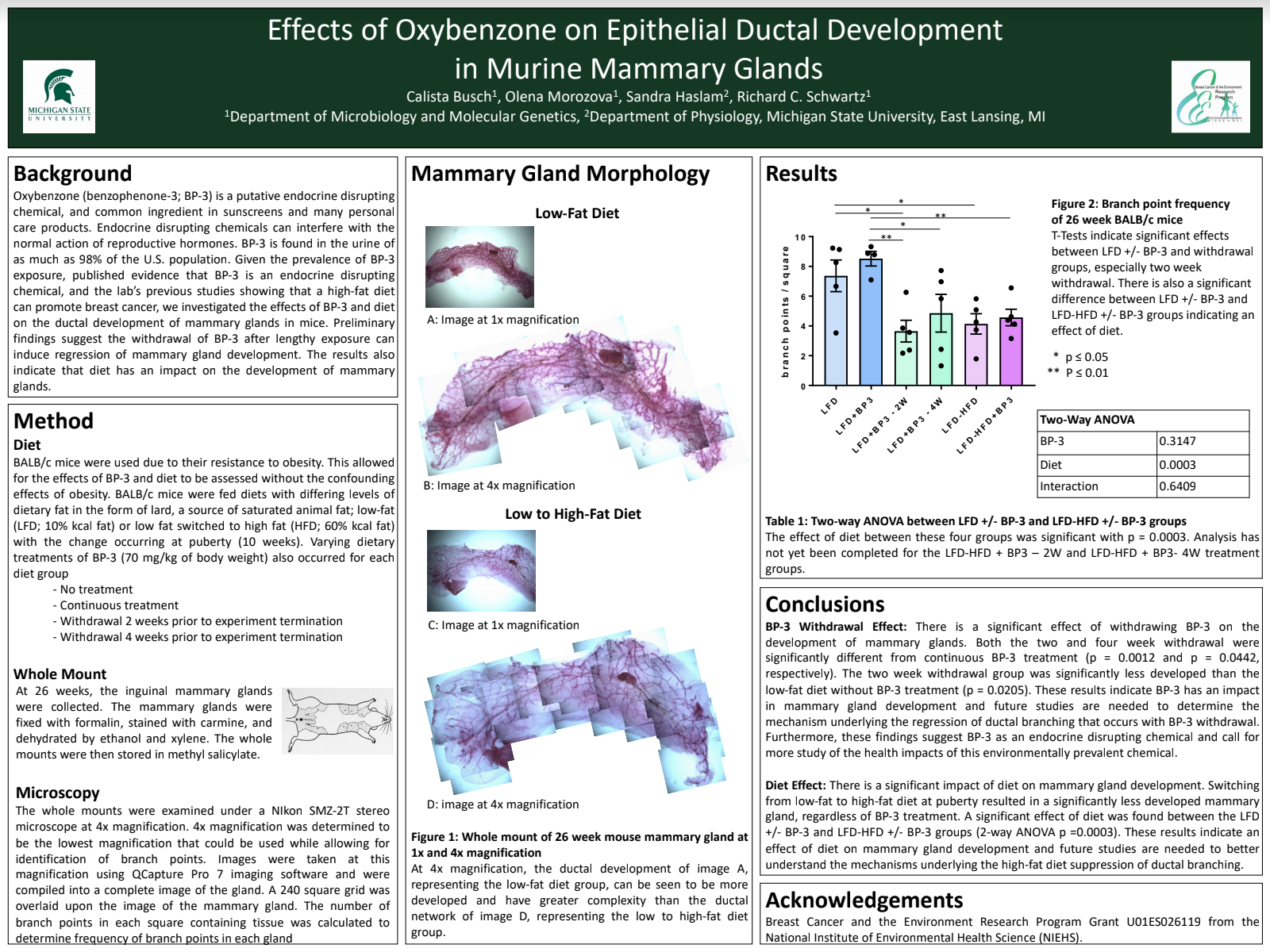
Oxybenzone (benzophenone-3; BP-3) is a putative endocrine disrupting chemical, and common ingredient in sunscreens and many personal care products. Endocrine disrupting chemicals can interfere with the normal action of reproductive hormones. BP-3 is found in the urine of as much as 98% of the U.S. population.
Given the prevalence of BP-3 exposure, published evidence that BP-3 is an endocrine disrupting chemical, and the lab’s previous studies showing that a high-fat diet can promote breast cancer, we investigated the effects of BP-3 and diet on the ductal development of mammary glands in mice. To that end, BALB/c mice were fed diets with or without BP-3. The diets also varied in dietary fat. Mice were fed a continuous low-fat diet (LFD; 10% kcal fat), continuous high-fat diet (HFD; 60% kcal fat), high-fat diet switched to low-fat diet (HFD-LFD) after puberty, or low-fat diet switched to high-fat diet (LFD-HFD) after puberty (10 weeks of age). To determine if BP-3 had a continued impact after exposure ended, two additional diet groups included withdrawal of BP-3 for 2 weeks and 4 weeks before termination of the experiment. At 26 weeks of age, mammary glands were collected from the mice. Images of whole mounted mammary glands were captured using a Nikon stereo microscope at 4x magnification. The frequency of branch points in each mammary gland was calculated as a representation of glandular development, and the differences in branch point frequency between diet groups were statistically compared. Preliminary findings suggest the withdrawal of BP-3 after lengthy exposure can induce regression of mammary gland development. The results also indicate that diet has an impact on the development of mammary glands.
Click to open in new tab.