

 |
Curating a Collection of Seed Bacteria Community Members Enriched Under Maternal Plant Stress Joanna Colovas, 3rd year |
Abstract
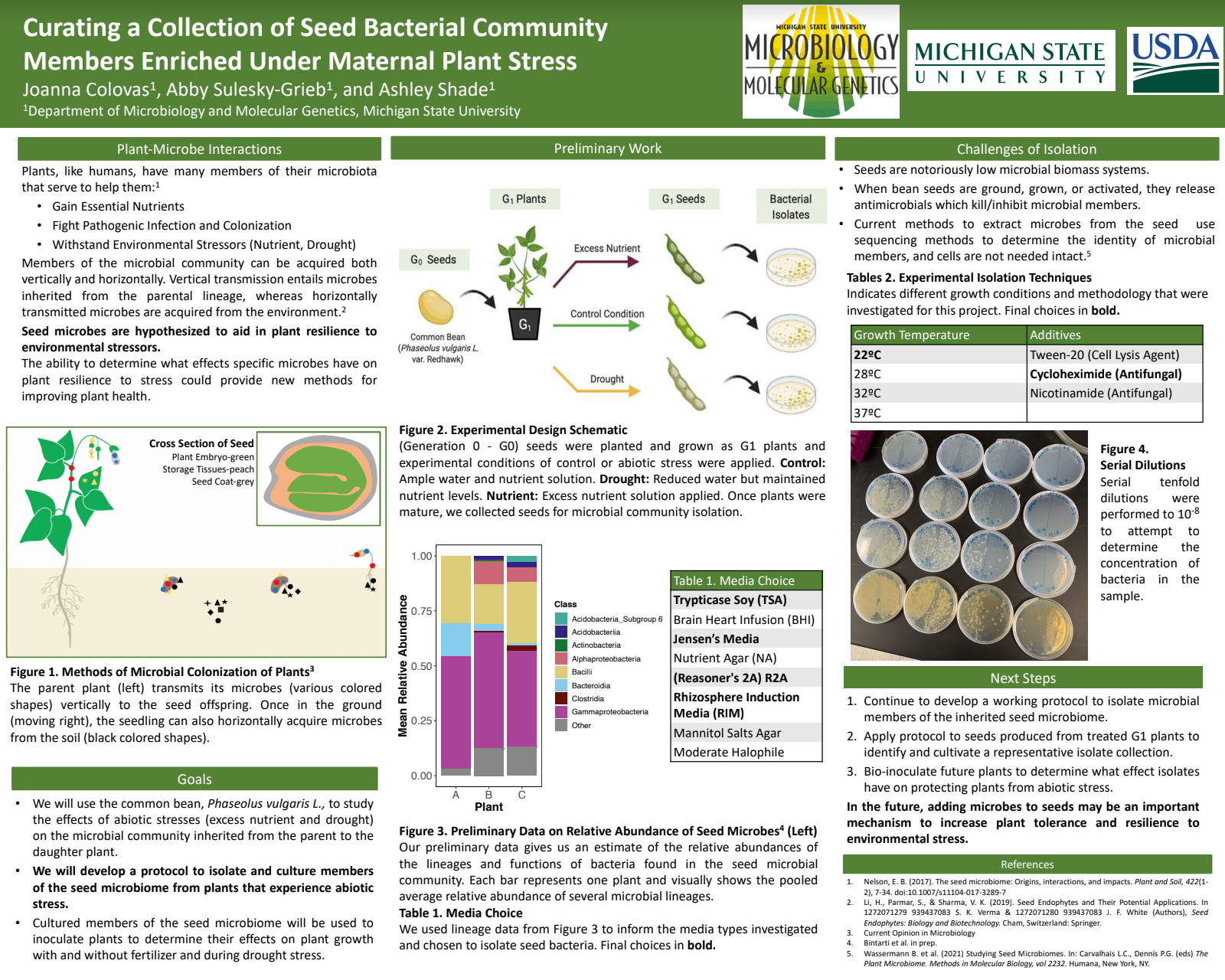
Many plants rely on interactions with microbes to gain essential nutrients for growth and to promote stress tolerance. One way that plants can acquire their microbiota is via vertical transmission from the parent plant via the seed. However, there is currently a knowledge gap regarding the seed microbiome and its consequences for the next generation of plants.
Pilot experiments in our lab have shown that the seeds from common bean plants (Phaseolus vulgaris L.) that were stressed by either drought or excess fertilizer had an altered seed microbiome as compared to control plants. Now, we seek to understand the costs and benefits of an altered seed microbiome for the stress tolerance and health of the plant. Specifically, we are creating a representative collection of bacterial community members that are enriched under these stress conditions as compared to the community found in control seeds. To understand these members’ consequences for plant outcomes under stress, we will perform controlled experiments in which we add the members to naïve plants and determine plant outcomes under stress. This research will inform which members of a seed bacterial community confer a protective, neutral or detrimental effect on plant health and aims to ultimately improve plant resilience via beneficial microbial community members. The ability to manipulate the seed microbiome to improve plant growth or resilience will benefit crop agriculture.
Click to open in new tab.